How Much Orange Do You Need For Deer Hunting In Hawaii
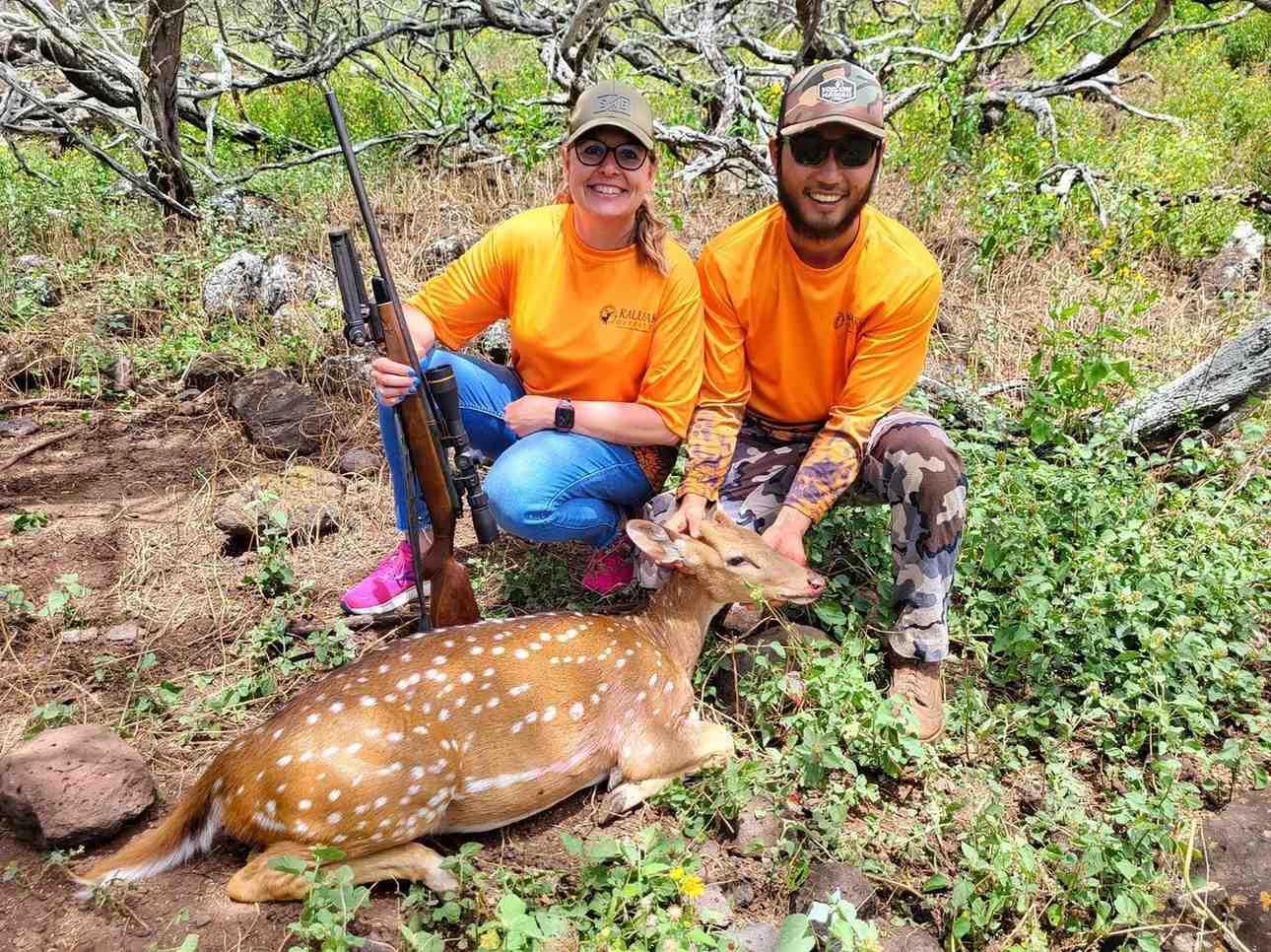
If you're getting ready for a guided Molokai hunt, chances are you've already typed some version of how much orange do you need for deer hunting in Hawaii into a search bar. It's a smart question to ask before you pack. Hawaii's rules don't work quite like the mainland states most hunters are used to. At Kaluakoi Outfitters, our answer is simple. Bring a hat, a vest, or a shirt in blaze orange, and you've covered what the law asks for.
Here's what that actually means once you're standing in the field.
How Much Orange Do You Need For Deer Hunting In Hawaii
There's no square inch minimum written into Hawaii law, which surprises a lot of hunters coming from states that measure everything down to the inch. Instead, the requirement centers on the garment itself. You need an exterior piece made of blaze orange material. A shirt works. So does a vest, a coat, or a jacket.
Your orange has to sit on top of whatever else you're wearing. Tuck it under a jacket or bury it in a pack and it no longer counts.
It also needs to stay visible from the front and the back at the same time. Carrying out meat or wearing a loaded pack doesn't give you an exception. That's exactly why we point hunters toward a hat, vest, or shirt. Any one of those three gets you compliant, and you can still layer camo or your normal hunting clothes underneath without a second thought.
What Counts As Blaze Orange Under Hawaii Law
Not everything orange passes inspection. The material needs to be commercially manufactured, and it can be solid or mesh as long as the mesh openings stay under one eighth of an inch.
Camo printed in orange tones doesn't meet the standard, even when it looks bright enough on the shelf. State law wants a solid, unbroken block of color, something that reads clearly against rock and brush rather than a pattern designed to break up your outline.
Already own a blaze orange vest from a hunt somewhere else? Check the tag before you fly out. If it's solid orange fabric or mesh within that spec, you're already set.
What To Wear When Hunting Deer In Hawaii
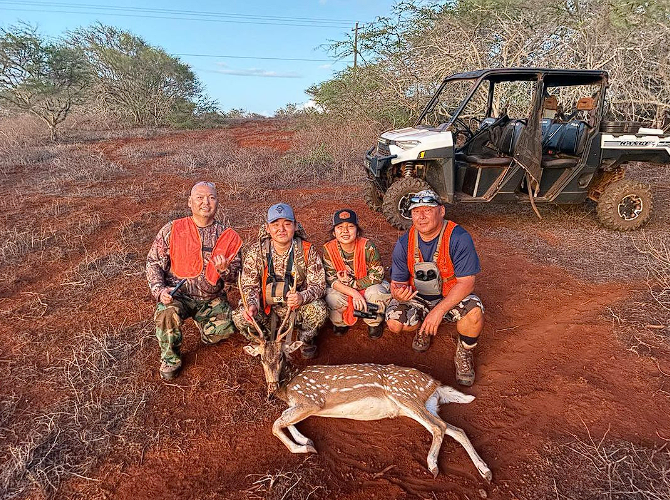
Your orange layer is only one part of the outfit. Molokai's ground will test whatever you bring, so build the rest of your gear around the terrain you'll actually be walking.
Boots come first. You'll be crossing lava rock, loose gravel, and steep pitches, so ankle support matters more than looks. Underneath your orange piece, go with breathable clothing. You'll sweat out here even when the weather feels mild, and heavy fabric will slow you down the moment you need to move fast on a stalk.
Pack layers you can shed or add as the day shifts. Mornings on Molokai's west side start cool. Then the sun takes over quickly, sometimes faster than you'd expect. A light base layer paired with something packable handles that swing far better than one thick outfit worn all day.
Your blaze orange hat, vest, or shirt goes on last, over everything, and it stays there the entire time you're in the field.
What Colors To Wear Deer Hunting
Outside of your required orange, the rest of your outfit should be working with you rather than against you. Deer process color differently than people do. Blues and yellows register more strongly to their eyes than reds and oranges do, which explains why blaze orange keeps you visible to other hunters without alarming game the way you might assume it would.
Underneath that orange layer, lean on muted earth tones. Tan, brown, and gray blend naturally into Molokai's dry landscape, so you're not standing out to the deer you're trying to get close to. Your orange still does its job for safety. Your base layers handle the concealment.
Hunter Orange Vs Blaze Orange
You'll see both terms used interchangeably, and that's fine, because they describe the same color. Hunter orange and blaze orange refer to that same fluorescent shade that looks almost neon in daylight. Whichever label shows up on a product tag or in the regulations, the requirement is identical.
What Colors Not To Wear Deer Hunting
A handful of colors work against you out there. White shows up sharply against Molokai's rock and dry brush, and it can catch a deer's attention from a surprising distance. Dark blue reads even more clearly, given how deer process that end of the color spectrum, so it can give away your position faster than a plain tan or brown would.
Red brings its own problem, and it's less about the deer than about the people around you. It can be mistaken for blood or misread by another hunter in low light, so it's worth leaving out of your outfit altogether. Loud prints and shiny fabric don't help either. Movement gives you away to a deer far more than color does, but there's no reason to add unnecessary risk with gear that draws the eye for no good reason.
What Is The Best Camo For Deer Hunting In Hawaii
Camo choice comes down to where you're actually hunting, and Molokai doesn't look like most places camo gets designed for. A pattern built for thick mainland forest isn't going to serve you well out here.
Camo Patterns For Molokai's Rocky And Brush Terrain
Look for patterns built around dry brush, rock, and open range rather than deep green forest tones. Tan, khaki, and gray brush patterns match the lava rock and dry grass you'll be walking through for most of your hunt. Keep in mind that camo sits underneath your required orange, not in place of it. Concealment below, visibility up top. That's the balance that actually works here.
Hunter Orange Rules For Guided Axis Deer Hunts On Molokai
At Kaluakoi Outfitters, hunter orange is required in the field, whether you're carrying a rifle or working a bow. Our hunts run across 3,000 acres of private, open range land on Molokai's west side, and safety shapes how we run every trip.
Your guide walks you through what to bring before the hunt even starts, so nothing is a surprise once you're on the ground. If you're still working out how much orange do you need for deer hunting in Hawaii before your trip, the short answer is: bring a hat, a vest, or a shirt in solid blaze orange, and you're ready to go.